An energy efficient apartment in Dubai is one that keeps heat out before the air conditioning has to remove it. That means a well-insulated envelope, high-performance glazing, right-sized cooling, smart metering and a building certified under Dubai’s green building rules. Cooling is the biggest energy load in this climate, so it is where the real savings sit.
This guide explains what the regulations require, what goes beyond them, and how to check a unit before you buy. It is written for buyers and investors comparing new apartments, not for renters hunting for quick tips.
TL;DR
- Cooling (HVAC) is the main energy consumer in a Dubai apartment, so the building envelope matters more than any gadget.
- Dubai’s Al Sa’fat system rates buildings Silver, Golden or Platinum on energy, water and materials. Ask which rating a project targets and when it is verified.
- Dubai’s regulations cap wall U-values at 0.48 W/m²K, roofs at 0.30 and glazing at 2.2. Better figures mean lower cooling loads.
- Certified high-performance buildings can deliver real savings: DEWA’s LEED Platinum complex reports 28% less energy and 61% less water than a standard building.
- Sub-metering and smart-home controls turn efficiency into data you can monitor, useful for owners and investors alike.
Table of Contents
- Why cooling decides everything in a UAE apartment
- The rules that set the baseline
- What actually makes an apartment efficient
- Certification: Silver, Gold, Platinum and LEED
- Why efficiency is also an investment question
- A buyer’s checklist for any new apartment
- Our perspective: efficiency without compromising the view
- Lapis Properties apartments designed for efficient living
- Everyday habits that add to the savings
- FAQ
- Sources
Why cooling decides everything in a UAE apartment
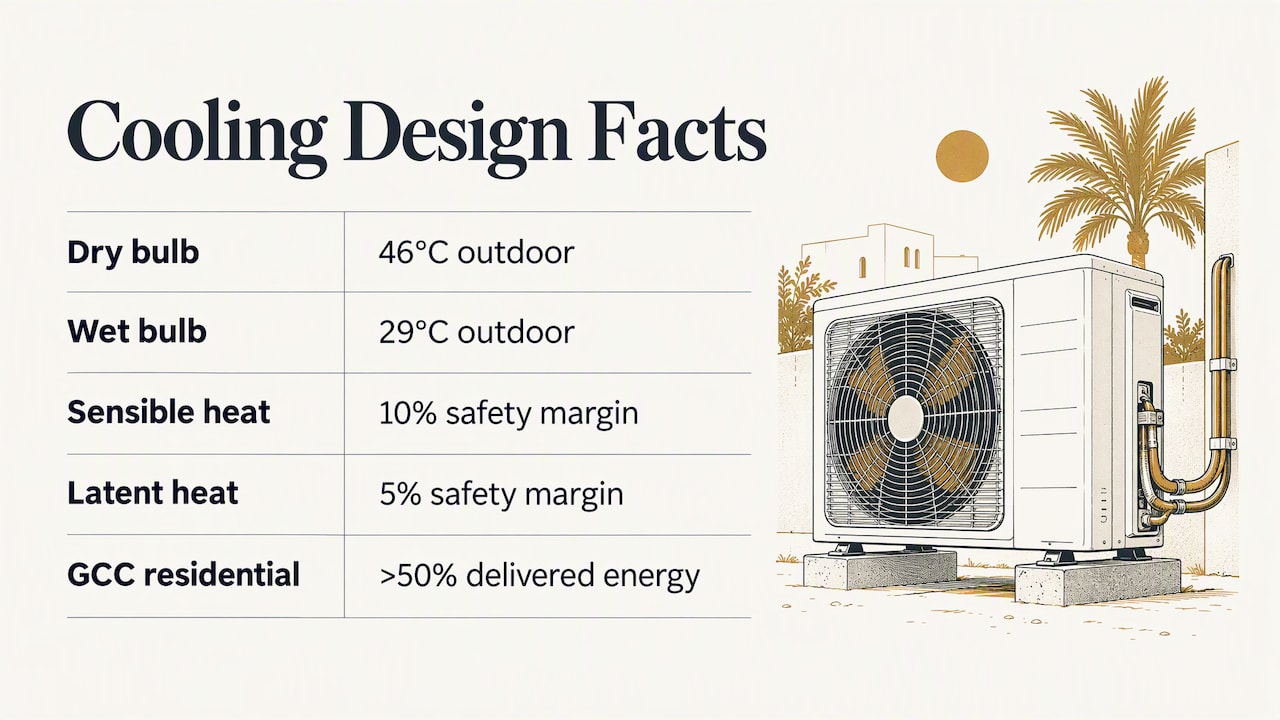
Most energy-saving advice online is written for temperate climates: swap the boiler, seal draughts, wash clothes cold. In Dubai the equation is different. Air conditioning runs for most of the year, and the building has to cope with extremes. Dubai’s green building specification sizes cooling equipment for an outdoor dry bulb temperature of 46°C and a wet bulb of 29°C, and limits the safety margin to 10% on sensible heat and 5% on latent heat so that equipment is not oversized.
Oversizing matters more than most buyers realise. A cooling system that is too large cycles on and off, wastes energy and handles humidity badly. Right-sizing is a design decision made years before you collect the keys, which is why the questions you ask at the off-plan stage count for more than the thermostat habits you adopt later.
The wider picture explains why regulators care. Research on Gulf high-rises notes that the residential sector accounts for more than 50% of delivered energy consumption in GCC countries. Efficiency in housing is therefore a national priority, not a niche preference.
The rules that set the baseline
Before comparing projects, know what every new building must already do.
Al Sa’fat, Dubai’s green building system
Dubai’s Al Sa’fat Green Building System rates buildings Silver, Golden or Platinum, based on performance in energy, water and materials across the building’s life. The bylaw is set out in Administrative Resolution No. 154 of 2020, and it covers residential buildings among other types.
At national level, the UAE’s green building regulation sets mandatory minimum energy and water standards for new buildings. In practice, a new apartment in Dubai is not a free-for-all: there is a floor. The question for you is how far above it a project sits.
Envelope limits: walls, roofs and glass
Dubai’s Green Building Regulations and Specifications set maximum U-values for the parts of the building that face the sun. A lower U-value means less heat passes through.
| Element | Maximum U-value (W/m²K) |
|---|---|
| External walls | 0.48 |
| Roofs | 0.30 |
| Glazing | 2.2 |
These figures come from the Dubai green building specification. They are limits, not targets. A developer that publishes better figures, or tells you which glazing specification a unit uses, is giving you something concrete to compare.
Sub-metering
The same regulations call for sub-metering of cooling, fans and electricity in large multi-tenant buildings, so performance can be tracked. For an owner, this is transparency. For an investor, it is a way to see what the building actually costs to run, rather than relying on a brochure.
What actually makes an apartment efficient
The industry view, reflected in the DEWA specification, is that passive design carries the most weight in this climate: insulated mass walls and carefully chosen glazing do more for long-term comfort and cost than active systems alone. Here is how to read that in a floor plan and a spec sheet.
Orientation and shading
Which way your windows face decides how much sun enters during the hottest hours. Balconies, deep reveals and shading devices cut direct gain before it reaches the glass. If you want to understand the logic, this overview of north and south facing homes shows how orientation changes how warm a home feels in a hot climate. Ask the developer for the orientation of the specific unit, not just the tower.
Glazing
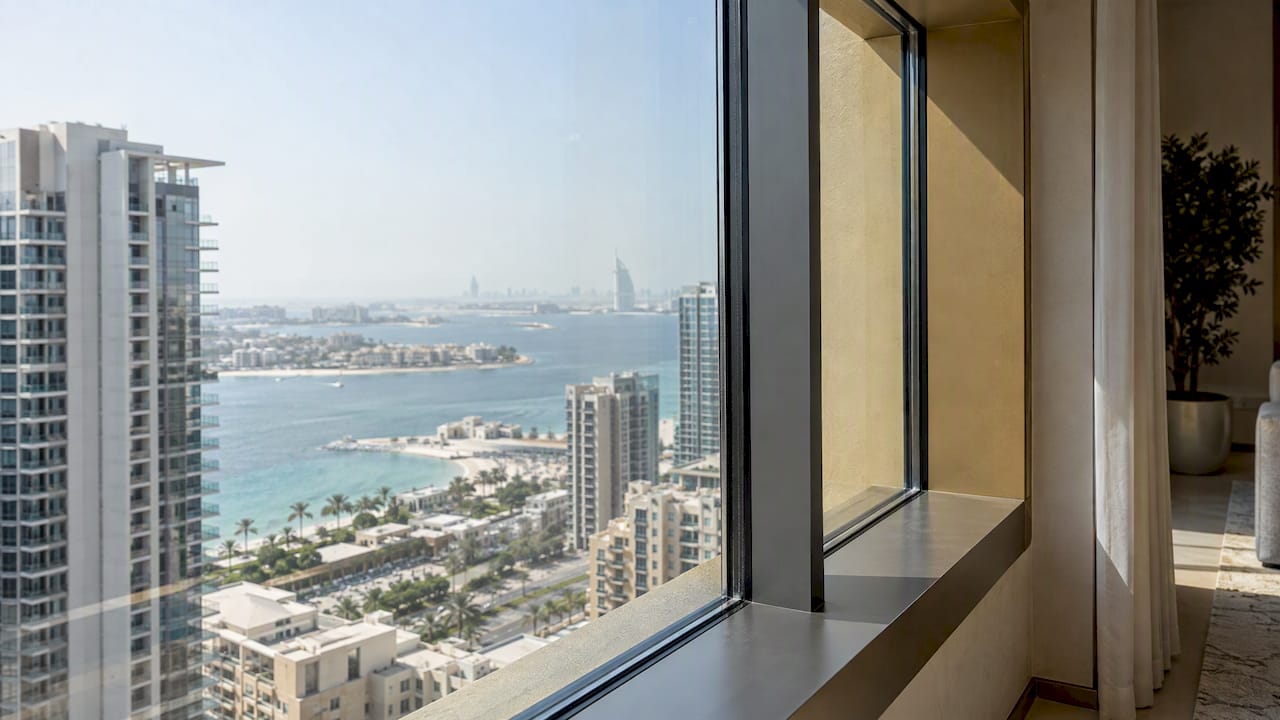
Large windows sell views, and sea views sell apartments. They are also where heat enters. Look for the glass specification: the U-value, and whether it is rated to manage solar gain. A view and an efficient window are not in conflict, but you should confirm both.
Insulation and thermal mass
Wall and roof build-ups determine how quickly the afternoon heat reaches your living room. A top-floor unit has the roof above it, so the roof’s 0.30 W/m²K limit is directly relevant to you. Ask what the build-up is, not simply whether it is compliant.
Cooling system and maintenance
Efficient equipment still needs to be kept clean to stay efficient. Dust and neglected components make cooling systems work harder, and this piece on HVAC problems that drain budgets explains how hidden faults raise running costs. Check who maintains the building’s central plant and whether service schedules are published to owners.
Smart controls and lighting
Zoned cooling, occupancy-based lighting and app control let you cut waste without living less comfortably. If you are weighing options, a guide to smart home technology integration helps you separate genuinely useful controls from novelty. The best set-ups are the ones you will actually use: schedules that pre-cool before you arrive and switch off when you leave.
Certification: Silver, Gold, Platinum and LEED
Certification is how you verify a promise. Two systems come up most in Dubai.
- Al Sa’fat is mandatory and local. It tells you the building meets Dubai’s own framework.
- LEED is international and voluntary. It is awarded by the US Green Building Council and signals a developer chose to be measured against a global benchmark.
The case for aiming higher is documented. DEWA’s accommodation complex in Warsan became the first LEED Platinum multifamily project worldwide, and the project reports energy savings of 28% and water savings of 61% compared with a standard building. Those figures come from a single, purpose-built complex, so treat them as proof of what is possible rather than a promise for every Platinum or Gold building.
An older example shows the same approach working at a smaller scale: a residential block in International City was documented with LEED Gold certification in its fact sheet. More recently, Expo City Dubai’s Expo Valley Views shows the market moving toward low-rise, landscaped, sustainability-led communities.
Why efficiency is also an investment question
If you are buying to let or to hold, efficiency touches returns in three ways.
- Running costs. Lower cooling demand reduces utility bills, which matters to tenants comparing total monthly cost, not just rent.
- Regulatory direction. Dubai’s Demand Side Management Strategy 2050 aligns with the UAE Net Zero Strategy 2050. Buildings that already perform well are better placed if requirements tighten.
- Demand. Environmentally conscious buyers and tenants increasingly ask about efficiency. A documented rating is easier to market than a general claim.
No one can promise a specific rental premium or resale uplift. What you can do is reduce the risk of buying a building that becomes expensive to run or hard to differentiate.
A buyer’s checklist for any new apartment
Take these questions to any developer, including us.
- Which Al Sa’fat rating is the project targeting, and at what stage is it verified?
- Is there a LEED or comparable certification target?
- What are the wall, roof and glazing U-values, against the limits of 0.48, 0.30 and 2.2 W/m²K?
- How is cooling provided, and how is it metered per unit?
- Which way does the unit face, and what shades the glazing?
- What smart controls are installed as standard, and what costs extra?
- Who operates and services the building’s systems after handover?
- Are water-saving fittings specified, given the water side of the ratings?
A developer who answers these precisely, in writing, is usually one who designed with them in mind.
Our perspective: efficiency without compromising the view
We build boutique residential projects, and our view is that scale helps. A smaller building means fewer compromises: each floor plan can be studied for orientation, shading and window placement rather than repeated by the hundred. It also means a closer relationship between the people who design the building and the people who live in it.
For us, sustainability is part of luxury, not a separate line item. The features buyers love, such as smart-home integration, premium finishes, wellness and fitness amenities and private plunge pools in selected units, work best when the building underneath them is designed to be comfortable and economical to run. A beautiful apartment that is expensive to cool is not luxurious for long.
Our advice to any buyer is to ask for specifics and to compare projects on documented performance. Treat brochures as a starting point, and the specification and the certification as the evidence. We welcome those questions, and we would rather you ask them before you sign than after you move in.
— Mark
Lapis Properties apartments designed for efficient living
If you are comparing new developments, two of our projects are worth a look. Lazord by Lapis is a boutique residential building in Majan, Dubailand, and you can read about its design approach in our article on Lazord’s boutique apartments. Azure by Lapis brings our waterfront approach to Ras Al Khaimah. Pricing for each is published on its project page. To discuss specifications, orientation and available units, you can view our current projects and enquire with our team.
Everyday habits that add to the savings
A well-built apartment does most of the work, but your habits still count.
- Set cooling to a steady, moderate temperature rather than switching between extremes.
- Close blinds on sun-facing windows during the afternoon.
- Use schedules or app control so the apartment is not fully cooled while you are out.
- Choose LED lighting and efficient appliances.
- Keep filters and vents clean, and have the system serviced on schedule.
These are the same habits the general advice pages repeat, but in Dubai the cooling-related ones deliver the largest effect.
FAQ
What is an energy efficient building in Dubai?
It is a building designed to use less energy, water and material over its life, and one that meets or exceeds Dubai’s green building rules. In practice that means a well-insulated envelope, efficient glazing, right-sized cooling and metering. Dubai assesses this through the Al Sa’fat system.
What uses the most energy in a Dubai apartment?
Cooling. Air conditioning is the main load in this climate, which is why Dubai’s specification sizes equipment carefully against local design temperatures and limits oversizing. Lighting, appliances and hot water come well behind.
Are sustainable apartments in Dubai more expensive to buy?
There is no single answer, because price depends on location, size, finish and developer. Efficiency features can cost more to build but reduce running costs over time. Compare the total cost of ownership, not only the purchase price.
How can I check an apartment’s efficiency before buying?
Ask for the Al Sa’fat rating, any LEED target, the wall, roof and glazing specifications and how cooling is metered. Request these in writing and compare them with the regulatory limits. A developer who has designed for efficiency will have the answers ready.
Sources
- Dubai Green Building Regulations and Specifications (DEWA)
- Practice Guide: Al Sa’fat Regulations (Dubai Municipality)
- Administrative Resolution No. 154 of 2020 on the Dubai Green Building System
- UAE national green building regulation (MOEI)
- DEWA’s Accommodation Complex in Warsan, first LEED Platinum multifamily project
- Prime Residency II LEED fact sheet (Trakhees)
- Expo Valley Views launch (Gulf News)
- Dubai Demand Side Management Strategy 2050 update (DEWA)
- Improving Energy Performance in Gulf Residential High-Rises (UNSW)